Back to BlogTypeScript 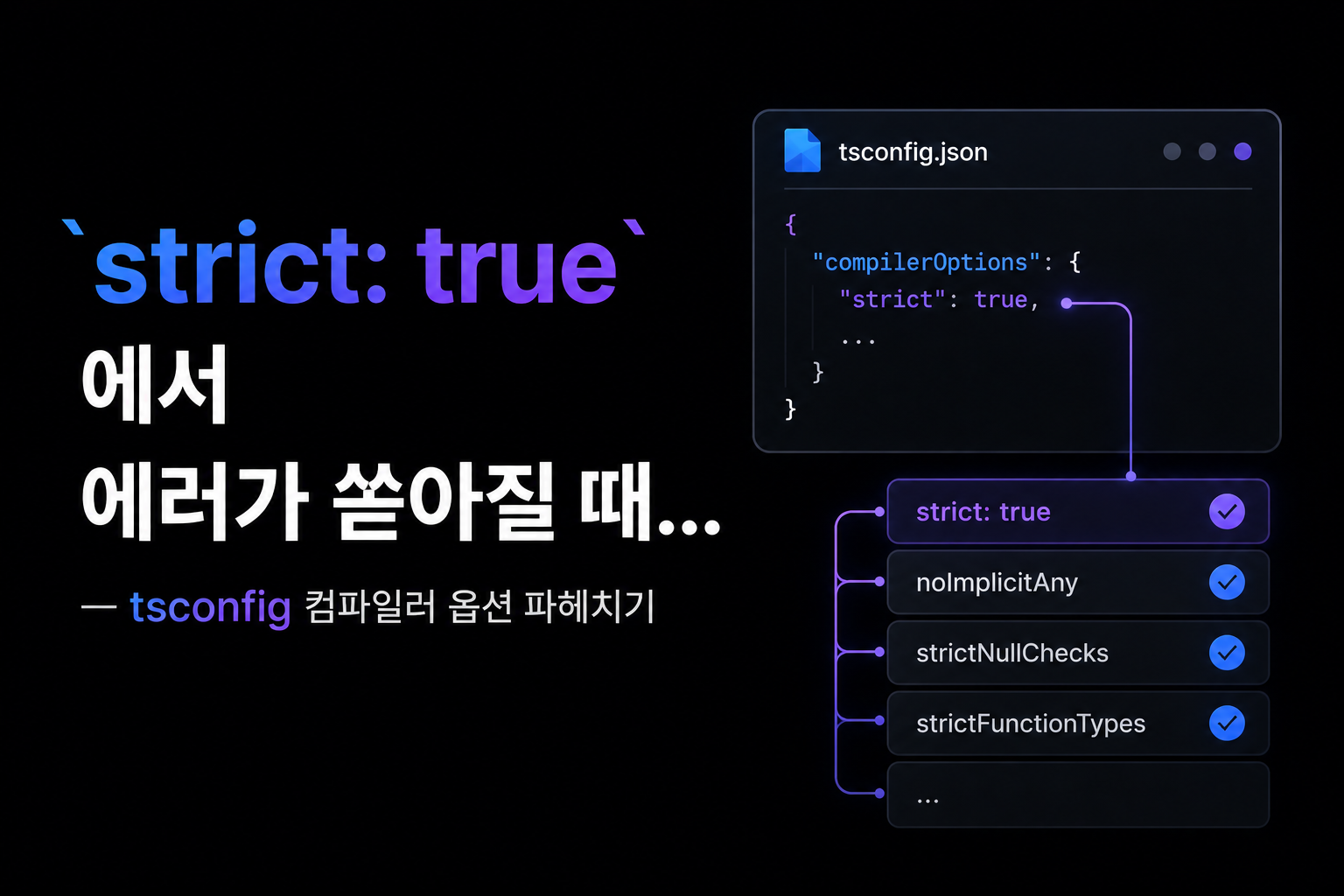
`strict: true`에서 에러가 쏟아질 때... — tsconfig 컴파일러 옵션 파헤치기
strict 하나로 뭘 켜는 건지, noImplicitAny랑 strictNullChecks가 따로 있는 이유가 뭔지. tsconfig 컴파일러 옵션을 하나씩 뜯어보자
December 23, 2025
typescripttsconfigstrictcompiler-optionsstrictNullChecks
TypeScript 프로젝트 세팅할 때 strict: true 한 줄 적고 넘어가는 경우가 많다.
그런데 이게 정확히 뭘 켜는 건지 관심 갖기엔 힘들 수 있다.
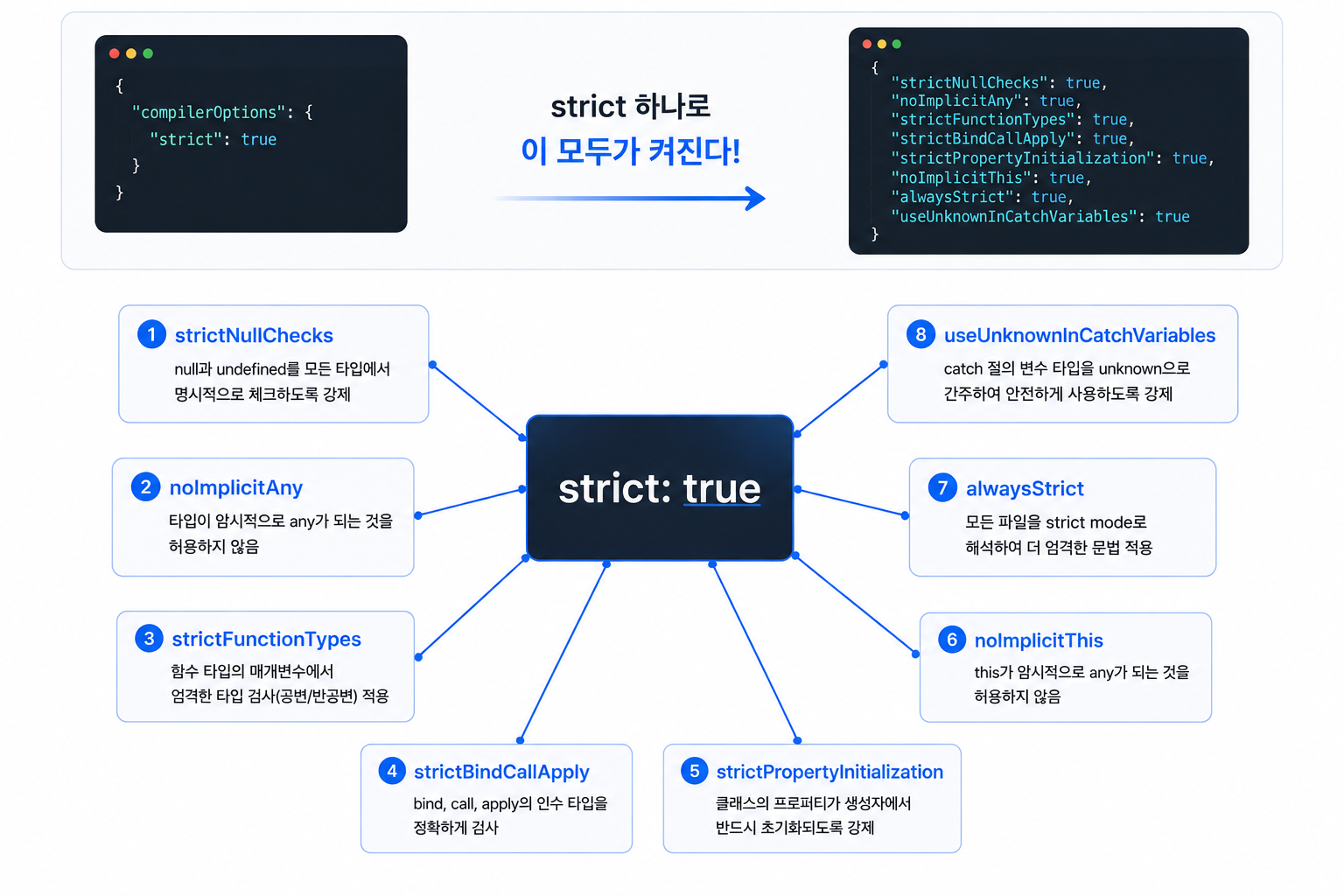
우선 strict는 하나의 옵션이 아니다.
여러 엄격 검사 옵션을 한 번에 켜는 플래그다.
각각 뭘 하는지 알아야 에러가 왜 나는지 이해하고, 상황에 맞게 조율할 수 있다.
strict가 켜는 옵션들
{
  "compilerOptions": {
    "strict": true
  }
}
이 한 줄이 아래를 전부 켠다.
{
  "strictNullChecks": true,
  "noImplicitAny": true,
  "strictFunctionTypes": true,
  "strictBindCallApply": true,
  "strictPropertyInitialization": true,
  "noImplicitThis": true,
  "alwaysStrict": true,
  "useUnknownInCatchVariables": true
}
하나씩 뭘 하는지 보자
strictNullChecks — 가장 중요한 옵션
strict 중에서 실질적인 영향이 가장 크다.
이걸 끄면 null과 undefined가 모든 타입에 할당 가능해진다.
// strictNullChecks: false (꺼진 상태)
let name: string = null;      // 오류 없음
let age: number = undefined;  // 오류 없음
켜면 null과 undefined는 명시적으로 허용한 타입에만 들어갈 수 있다.
// strictNullChecks: true (켜진 상태)
let name: string = null;          // 오류
let name: string | null = null;   // 정상
이게 켜져 있어야 TypeScript가 실제로 null 안전성을 보장한다.
꺼진 상태에서는 "사용 전에 null 체크를 해줘" 같은 보장이 없다.
function getUser(id: number): User | null {
  // ...
}

const user = getUser(1);
console.log(user.name); // strictNullChecks: true면 오류
                        // — user가 null일 수 있음
noImplicitAny — 타입 추론 실패를 막는다
TypeScript가 타입을 추론하지 못하면 암묵적으로 any가 된다.
이 옵션을 켜면 그 상황에서 에러가 난다.
// noImplicitAny: false (꺼진 상태)
function process(data) { // data: any — 오류 없음
  return data.value;
}

// noImplicitAny: true (켜진 상태)
function process(data) { // 오류: 'data'에 암묵적으로 'any' 형식이 포함됨
  return data.value;
}
파라미터 타입을 명시하지 않으면 에러가 난다.
any를 쓰고 싶으면 명시적으로 써야 한다.
function process(data: any) { // 명시적 any — 오류 없음
  return data.value;
}
암묵적 any를 막는 것이지, any 자체를 금지하는 건 아니다.
strictFunctionTypes — 함수 파라미터 반공변성
공변과 반공변이란
타입 간의 관계가 상속 방향과 같은 방향으로 흐르면 공변, 반대로 흐르면 반공변이다.
공변 (Covariance) — 반환값은 공변적이다.
class Animal {}
class Dog extends Animal {}

type Producer<T> = () => T;

const dogProducer: Producer<Dog> = () => new Dog();
const animalProducer: Producer<Animal> = dogProducer; // OK
Dog extends Animal이면 Producer<Dog>도 Producer<Animal>에 할당 가능하다.
방향이 같다.
"더 구체적인 걸 반환해도 괜찮다" — Dog는 Animal이기 때문이다.
반공변 (Contravariance) — 매개변수는 반공변적이다.
type Consumer<T> = (arg: T) => void;

const animalConsumer: Consumer<Animal> = (a: Animal) => {};
const dogConsumer: Consumer<Dog> = animalConsumer; // OK
Dog extends Animal인데 Consumer<Animal>이 Consumer<Dog>에 할당 가능하다.
단, 방향이 반대다.
"더 넓은 타입을 처리할 수 있으면, 좁은 타입도 당연히 처리 가능하다" — Dog도 Animal이기에...
strictFunctionTypes가 하는 일
이 옵션이 꺼져 있으면 함수 파라미터가 이변적(bivariant) 으로 검사된다.
즉, 공변과 반공변 둘 다 허용된다.
type Handler<T> = (value: T) => void;

const handleString: Handler<string> = (s) => console.log(s.toUpperCase());

const handler: Handler<string | number> = handleString;
// strictFunctionTypes: false → 오류 없음
// strictFunctionTypes: true  → 오류
Handler<string | number>는 number도 받을 수 있어야 한다.
그런데 handleString은 string만 처리한다.
handler(42)를 호출하면 런타임 에러가 난다.
옵션을 켜면 파라미터를 반공변적으로 검사해서 이런 잘못된 할당을 컴파일 타임에 잡아낸다.
단, 메서드 선언(: 방식이 아닌 () 방식)에는 적용되지 않는다.
하위 호환성 때문이다.
strictPropertyInitialization — 클래스 프로퍼티 초기화 강제
클래스 프로퍼티가 생성자에서 초기화되지 않으면 에러가 난다.
class UserService {
  private db: Database; // 오류: 생성자에서 초기화되지 않음

  constructor() {
    // db를 초기화하지 않음
  }
}
초기화를 보장해야 한다.
class UserService {
  private db: Database;

  constructor(db: Database) {
    this.db = db; // 정상
  }
}

// 또는 definite assignment assertion
class UserService {
  private db!: Database; // !로 "나중에 확실히 초기화됨"을 명시

  init(db: Database) {
    this.db = db;
  }
}!는 TypeScript에게 "내가 책임지겠다"는 신호다.
실제로 초기화를 안 하면 런타임 에러가 날 수 있으니 남용은 피하는 게 맞다.
useUnknownInCatchVariables — catch 변수를 unknown으로
TypeScript 4.4부터 strict 안에 포함됐다.
try {
  // ...
} catch (error) {
  // useUnknownInCatchVariables: false → error: any
  // useUnknownInCatchVariables: true  → error: unknown

  console.log(error.message); // true면 오류: unknown에 직접 접근 불가
}throw는 어떤 값이든 던질 수 있으니 catch 변수가 unknown인 게 맞다.
직접 접근하려면 타입을 좁혀야 한다.
catch (error) {
  if (error instanceof Error) {
    console.log(error.message); // 안전
  }
}
strict 외의 유용한 옵션들
strict에 포함되지 않지만 켜두면 도움이 되는 옵션들이 있다.
noUncheckedIndexedAccess
배열 인덱스 접근과 객체 인덱스 시그니처 접근의 반환 타입에 undefined를 포함시킨다.
// noUncheckedIndexedAccess: false (기본값)
const arr: string[] = ["a", "b"];
const first: string = arr[0]; // 정상 — 범위 밖이어도 타입은 string

// noUncheckedIndexedAccess: true
const first: string | undefined = arr[0]; // undefined도 포함
const map: Record<string, number> = {};
const value = map["key"]; // string | undefined배열이나 객체에서 값을 꺼낼 때마다 undefined 가능성이 생긴다.
조금 번거롭지만 실제로는 안전하다.
noImplicitReturns
함수의 모든 코드 경로가 값을 반환하는지 검사한다.
// noImplicitReturns: true
function getLabel(status: string): string {
  if (status === "active") return "활성";
  // 오류: 일부 경로에서 반환값이 없음
}if에만 return이 있고 else에 없으면 에러가 난다.
noFallthroughCasesInSwitch
switch 문에서 break 없이 다음 case로 떨어지는 걸 막는다.
switch (status) {
  case "loading":
    console.log("로딩 중");
    // 오류: fallthrough — break가 없음
  case "done":
    console.log("완료");
    break;
}
exactOptionalPropertyTypes
선택적 프로퍼티에 undefined를 명시적으로 할당하는 것을 막는다.
interface Config {
  theme?: "light" | "dark";
}

// exactOptionalPropertyTypes: false (기본값)
const config: Config = { theme: undefined }; // 정상

// exactOptionalPropertyTypes: true
const config: Config = { theme: undefined }; // 오류: undefined는 허용값이 아님theme?는 "없어도 된다"는 뜻이지, "undefined를 넣어도 된다"는 뜻이 아니다.
이 옵션이 그 차이를 강제한다.
실전 tsconfig 권장 구성
Next.js / React 프로젝트
{
  "compilerOptions": {
    "target": "ES2017",
    "lib": ["dom", "dom.iterable", "esnext"],
    "allowJs": true,
    "skipLibCheck": true,
    "strict": true,
    "noEmit": true,
    "esModuleInterop": true,
    "module": "esnext",
    "moduleResolution": "bundler",
    "resolveJsonModule": true,
    "isolatedModules": true,
    "jsx": "preserve",
    "incremental": true,
    "noUncheckedIndexedAccess": true,
    "noImplicitReturns": true,
    "paths": {
      "@/*": ["./src/*"]
    }
  }
}
기존 JS 프로젝트를 TS로 마이그레이션 중일 때
strict를 한 번에 켜면 에러가 너무 많이 나온다. 점진적으로 올리는 순서가 있다.
{
  "compilerOptions": {
    // 1단계 — 먼저 이것만
    "noImplicitAny": true,

    // 2단계 — 어느 정도 정리되면
    "strictNullChecks": true,

    // 3단계 — 마지막에
    "strict": true
  }
}noImplicitAny부터 켜고 any를 하나씩 제거한다.
그 다음 strictNullChecks로 null 관련 에러를 잡는다.
마지막에 strict: true로 나머지를 전부 켠다.
skipLibCheck — 언제 써야 하나
라이브러리의 .d.ts 파일에 대한 타입 검사를 건너뛴다.
{
  "skipLibCheck": true
}
라이브러리들끼리 타입 충돌이 나거나, 오래된 @types 패키지가 에러를 뿜을 때 이걸 켜면 해결되는 경우가 많다.
단점은 라이브러리 타입 오류를 못 잡는다는 것이다.
하지만 대부분의 실용적인 프로젝트에서는 내가 쓰는 라이브러리 소스가 잘못된 건 내가 고칠 수 없으니 켜두는 게 낫다.
정리
| 옵션 | 하는 일 | 우선순위 |
|---|---|---|
strictNullChecks | null/undefined 할당 제한 | 최우선 |
noImplicitAny | 암묵적 any 금지 | 최우선 |
strictFunctionTypes | 함수 파라미터 반공변성 검사 | strict 포함 |
strictPropertyInitialization | 클래스 프로퍼티 초기화 강제 | strict 포함 |
useUnknownInCatchVariables | catch 변수를 unknown으로 | strict 포함 |
noUncheckedIndexedAccess | 인덱스 접근에 undefined 포함 | 권장 |
noImplicitReturns | 모든 경로 반환 강제 | 권장 |
exactOptionalPropertyTypes | optional 프로퍼티 엄격화 | 선택적 |
strict: true는 출발점이다.
거기서 noUncheckedIndexedAccess랑 noImplicitReturns 정도 더 켜두면 대부분의 실수를 컴파일 타임에 잡을 수 있다.